Dry-packed: Store in airtight jars at room temp for 6–12 months.
Oil-packed: Only if fully dried and stored in the refrigerator—use within 2–3 months.
Tip: Add vinegar or lemon juice to oil if you want extra safety (but not required for dry tomatoes).
3. Pressure Canning (For Low-Acid Tomato Products)
For: Whole tomatoes, tomato juice, or sauce without added acid.
Why pressure canning? It reaches 240°F (116°C)—hot enough to kill botulism spores.
Shelf life: 12–24 months in a cool, dark pantry.
Note: Water-bath canning requires added acid (lemon juice or citric acid)—about 1 tbsp per pint.
4. Fermented Tomatoes (Savory, Probiotic, Vinegar-Free)
How: Submerge cherry tomatoes in a 2–3% salt brine (no vinegar!). Ferment at room temp for 5–10 days, then refrigerate.
Shelf life: 6–12 months in the fridge.
Flavor: Tangy, umami-rich—great in grain bowls or as a condiment.
Methods to Avoid (Despite What the Internet Says)
Method
Why It’s Unsafe
Tomatoes in oil, room temp
Botulism risk—anaerobic, low-acid environment
“Just salt them in a jar”
Salt alone doesn’t prevent spoilage or botulism
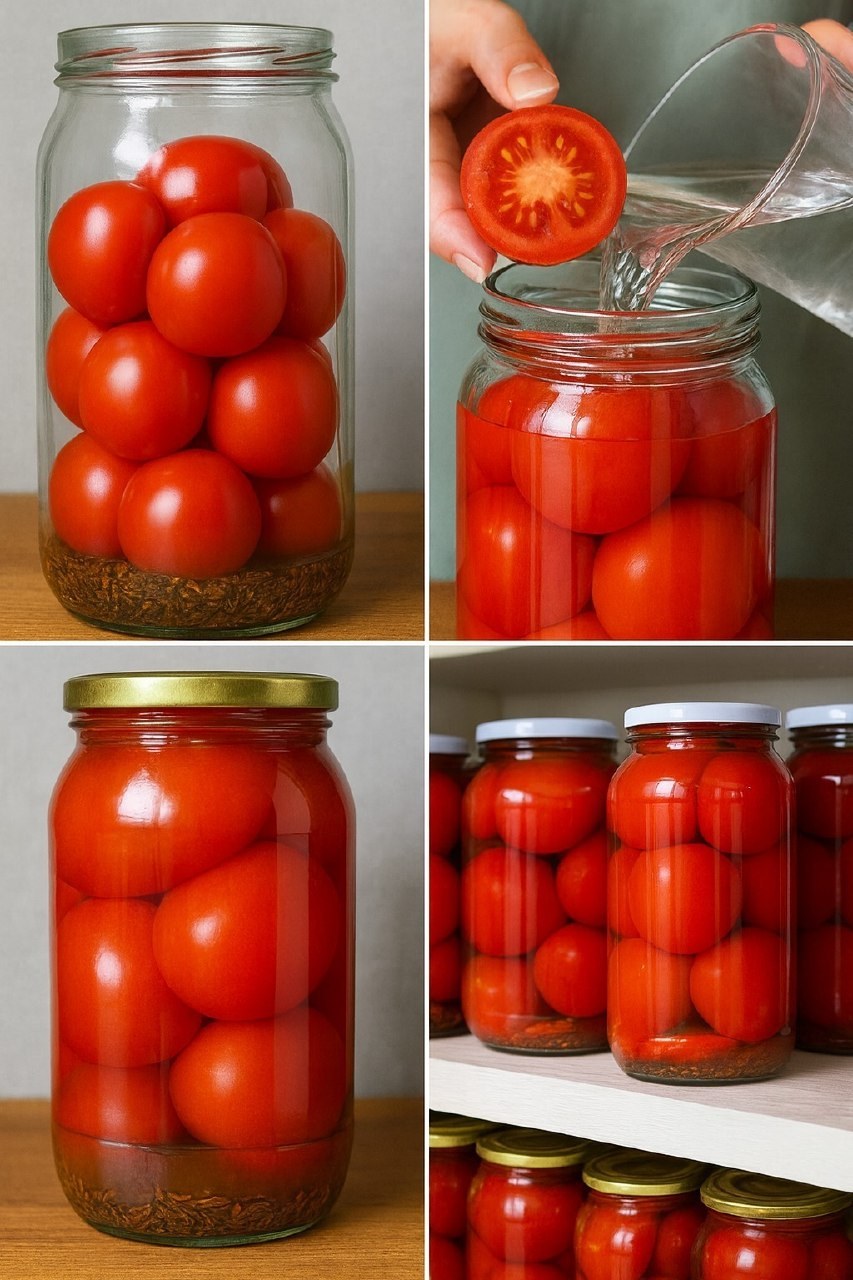
Sealed jars with herbs/garlic, no processing
Creates perfect conditions for C. botulinum
Botulism is odorless, tasteless, and deadly. If a preserved tomato product smells “off,” bubbles, or has a bulging lid—do not taste it. Discard immediately.
Safe “No-Vinegar” Tomato Preservation Cheat Sheet
Method
Vinegar Needed?
Shelf Life
Best For
Freezing
No
12–18 months
Sauces, soups, stews
Dehydrating (dry)
No
6–12 months
Snacking, rehydrating
Fermenting
No
6–12 months (fridge)
Salads, charcuterie
Pressure Canning
No
12–24 months
Whole tomatoes, juice
Water-Bath Canning
Yes (for safety)
12–18 months
High-acid sauces
💡 Final Tip: When in Doubt, Freeze!
If you want simplicity, safety, and zero vinegar—freezing is your best friend. It preserves flavor better than canning and takes minutes. Just label your bags with the date, and you’ll have summer’s sweetness ready for winter chili, pasta sauce, or shakshuka.
Honor the Harvest—Safely
We all want to stretch those sun-ripened tomatoes as far as they’ll go. But real food preservation isn’t about shortcuts—it’s about respecting both the food and your health.
So skip the viral “miracle” methods. Choose a safe, proven technique. And enjoy your tomatoes—not just for weeks, but for seasons to come.
Have you tried freezing or fermenting tomatoes?
Share your favorite preservation tips in the comments! And if this helped you avoid a risky recipe, please pass it on—safe food is food worth sharing