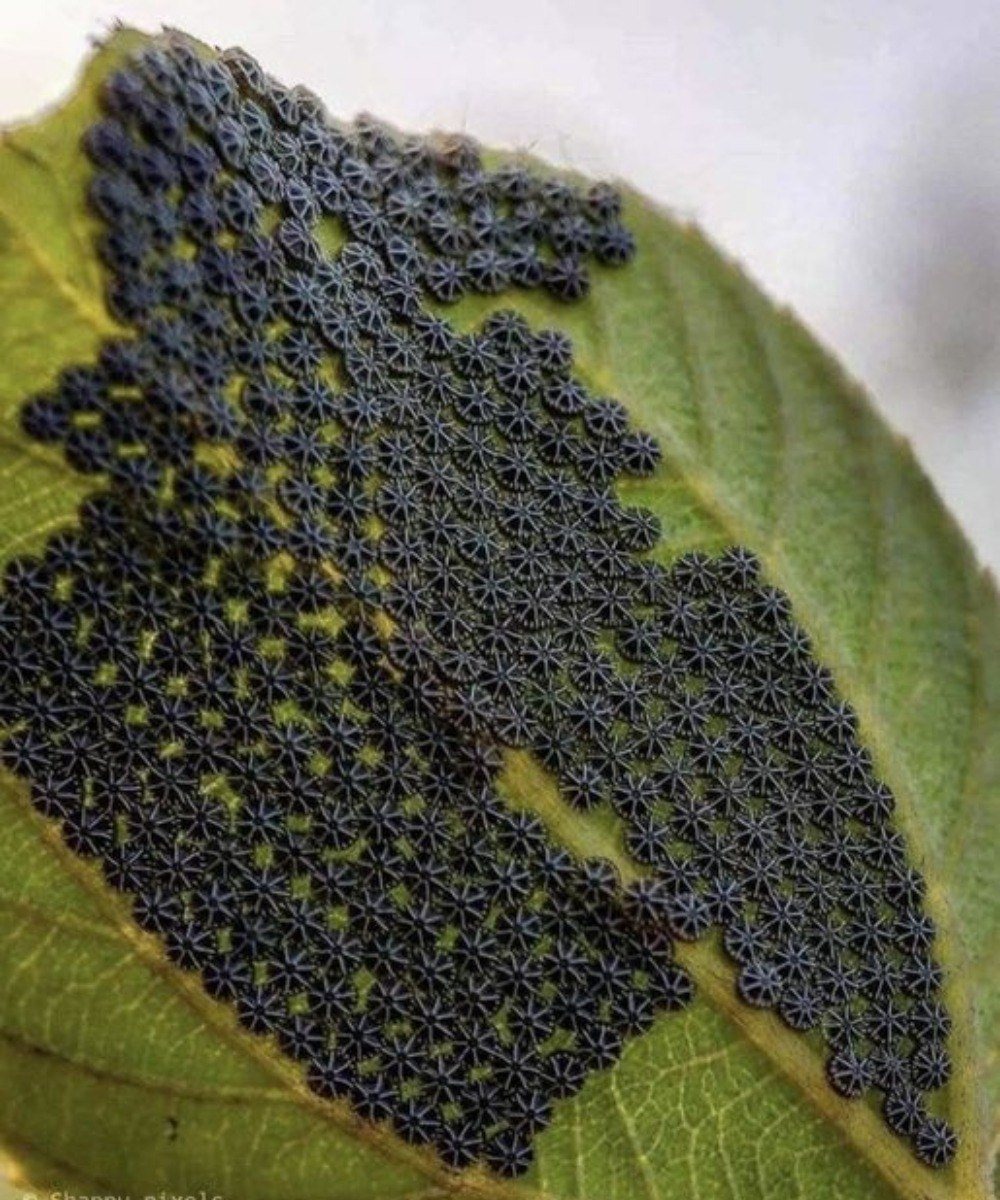
Allow me to introduce you to the Mourning Cloak butterfly, in case you are not acquainted with this fascinating species. Its fascinating life cycle and other remarkable features make it an ecological wonder.
Where should we begin? With those enthralling eggs. The images I saw made them seem like a thin coating of black lace embellishing the leaves. Upon closer inspection, their unexpected beauty becomes apparent. Clusters of these eggs are evidence of the perfect geometry in nature.
I felt a combination of amazement and dread at first, as do many gardeners. “Will they have a positive or negative impact?” It occurred to me. I am relieved to report excellent news!
Ally or Enemy? Why Mourning Cloak Butterflies Are Beneficial
If you’re a gardener, you probably wouldn’t mind if the Nymphalis Antiopa caterpillars munched on willows, elms, and poplars instead of leaves. So, you may relax if your garden is overflowing with blooms and veggies. Because they eat on rotting fruit, these butterflies really help the decomposition process along, so they’re not all bad.
Hibernation and Its Symbolic Significance
The way the Mourning Cloak butterfly goes into hibernation for the winter is one of the things that really gets under your skin. When it becomes chilly outside, these butterflies don’t do what others do—they hide behind sheds, loose bark, or even woodpiles. When spring arrives, these butterflies are usually among the first to emerge, often even before the flowers begin to open. Their evocative name, “Mourning Cloaks,” is derived from the fact that their black wings mimic a cloak worn at a funeral. Their early entrance in the springtime landscape adds to this term.
Maintaining a Harmonious Garden Ecosystem
When we gardeners think of insects, we usually see the damage they do to our plants right away. We get the creeps whenever we see caterpillars because we think they’re going to eat anything they come across. But you have stand back and see the forest for the trees.
An exquisite illustration of the delicate equilibrium found in nature is the Nymphalis Antiopa butterfly. In spite of the fact that the caterpillars will eat some leaves, they will not destroy your garden. Actually, you’re helping to maintain a balanced ecology by creating a home for these butterflies.
Thus, what is your course of action?
Leave these caterpillars and their eggs alone if you find them in your garden. Embrace the journey and see the change for yourself! Carefully moving the caterpillars to a neighboring tree or shrub can make them happier and less likely to munch on your valuable plants, which is great news if you value your valued flowers.
Harmony and Exploration: The Gardening Key
Finding a balance between the plants you care about and the animals that inhabit your yard is the essence of gardening. Before you go for the pesticide the next time you see anything out of the ordinary in your garden, make sure you explore thoroughly. You may find something as extraordinary as the Nymphalis Antiopa butterfly eggs that I found.
Never forget that your garden is an integral part of the incredible journey. Gardening is a rewarding and enlightening activity because of the abundance and difficulties of each season.